In short
- They are already adapted to dry summers, limy soil and wind.
- Plant in autumn and water only for the first two summers.
- No feeding and little pruning.
- Always buy nursery-grown plants: never dig them up from the wild.
The plants that grow wild in the scrubland, stream beds and coast have had thousands of years to adapt to the island's climate. A garden made with them needs very little water, almost no treatments and looks good all year.
See what grows naturally nearby: it is the best clue to what will work. Note the hours of sun, whether the soil is stony or deep and whether sea wind reaches it. That tells you which landscape to copy: scrubland, pine wood, stream bed or coast.
A natural garden has several storeys. On top, trees such as wild olive, carob or holm oak. In the middle, shrubs such as mastic, myrtle, mock privet or strawberry tree. Below, sub-shrubs such as rosemary, rockroses, heath or Balearic St John's wort, with dwarf fan palm and Mauritanian grass among them to give structure.
From October to December, with the first rains. Group plants in drifts of three or five of the same species, as in the wild, instead of lining them up. Use young plants in small pots: they root better and soon catch up with larger ones.
In the first summer, one deep watering every ten to fifteen days; in the second, one a month. After that, most live on rainfall. A temporary drip line that you later remove is enough. Overwatering weakens them and shortens their lives.
Cover the soil with gravel or shredded prunings and don't feed: these plants live in poor soils. Prune little, only to shape them after flowering. Many “switch off” in summer to save water: they aren't dead, they come back with the rains.
Keep in mind: Several species found only in the Balearics, such as the peony, the hellebore and the foxglove, are protected in the wild. Nursery-grown plants can be bought with full guarantees.
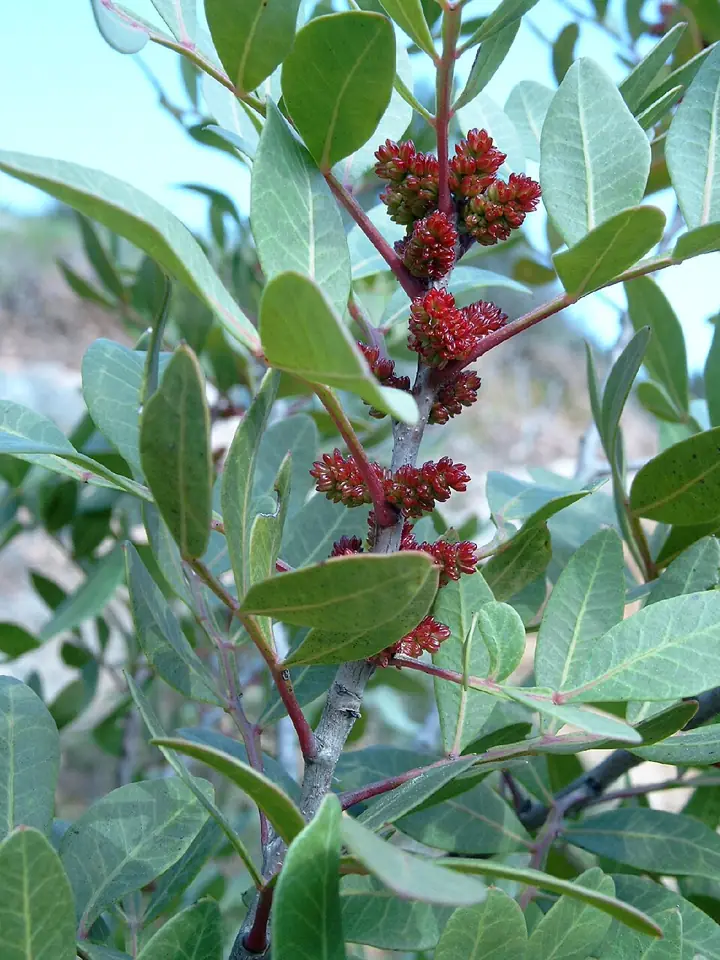 Shrub
Very hardy native shrub, ideal for informal hedges and unwatered areas once established.
See profile →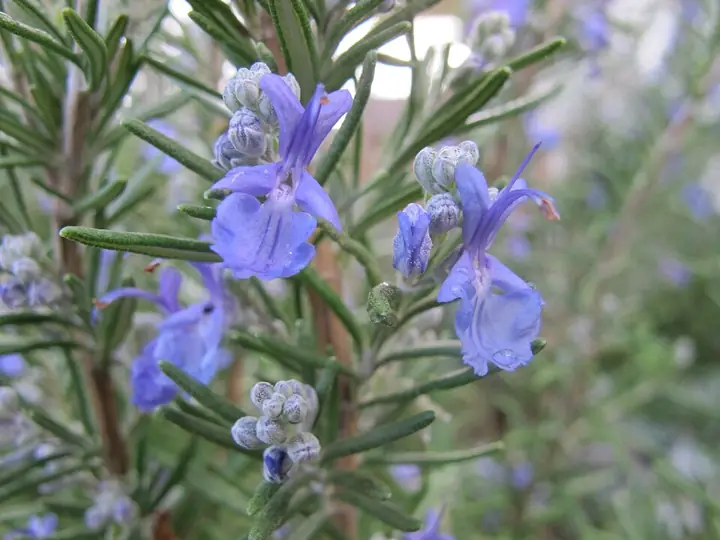 Herb
Takes full sun, wind and drought. Flowers in winter and is a magnet for bees. Avoid waterlogging.
See profile →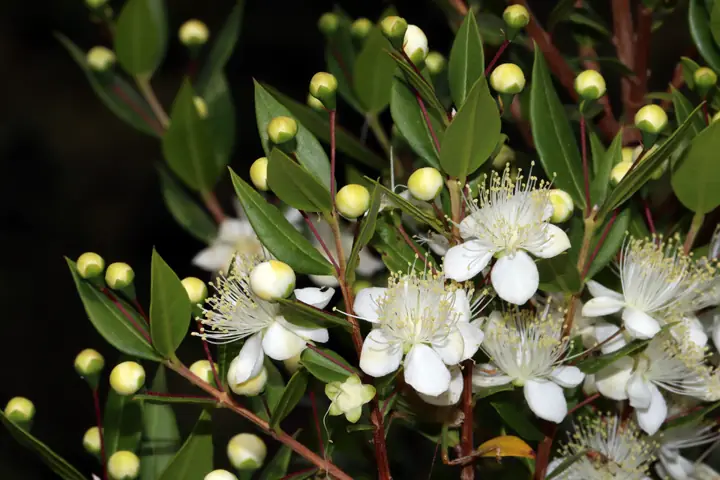 Shrub
Aromatic shrub with white summer flowers. Takes clipping and suits low hedges.
See profile →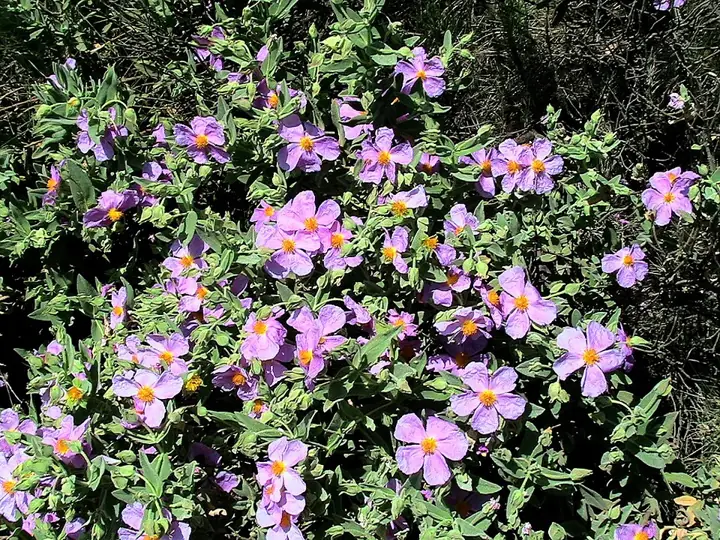 Shrub
Pink spring flowers and grey heat-proof leaves. Needs good drainage.
See profile →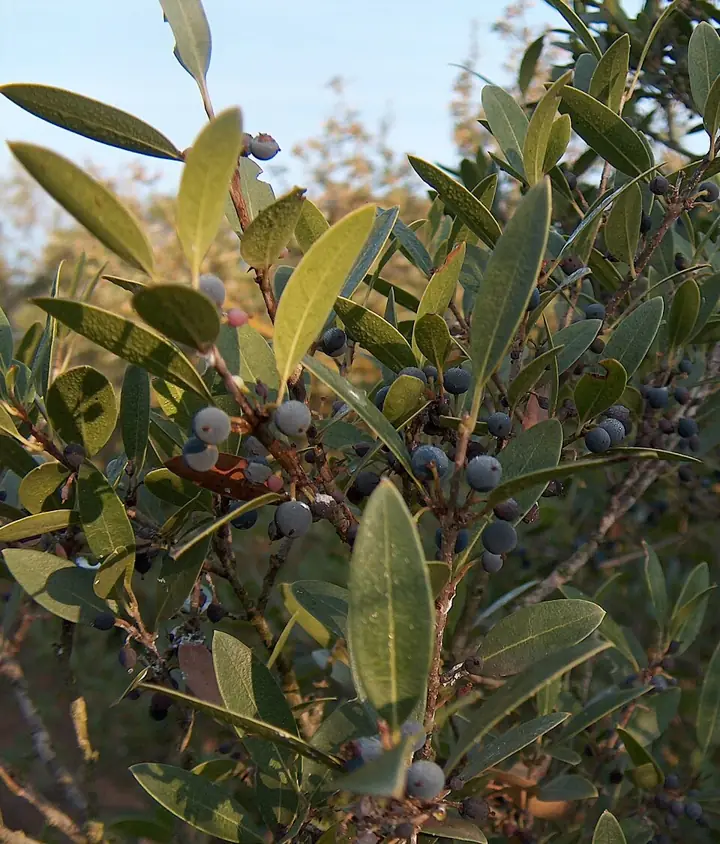 Shrub
A native shrub with narrow leaves, like a fine-leaved olive. Clips as well as box and takes drought, wind and salt: a Mediterranean hedge without irrigation.
See profile →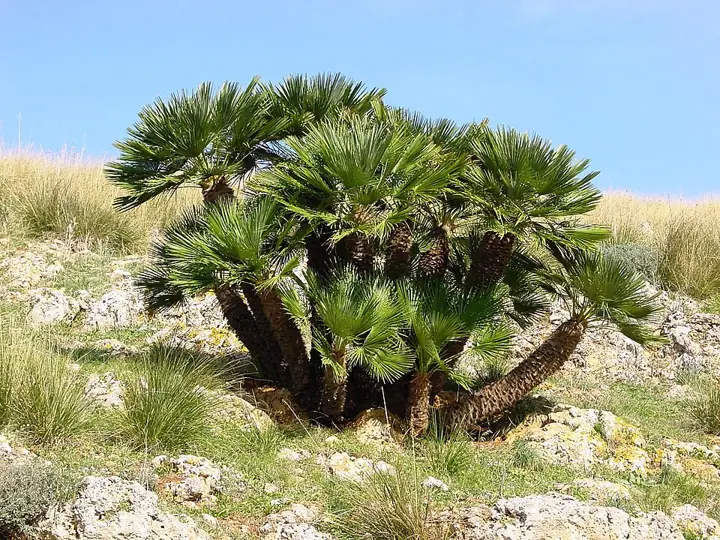 Palm
Europe's only native palm. Very drought tolerant and less affected by the red palm weevil.
See profile →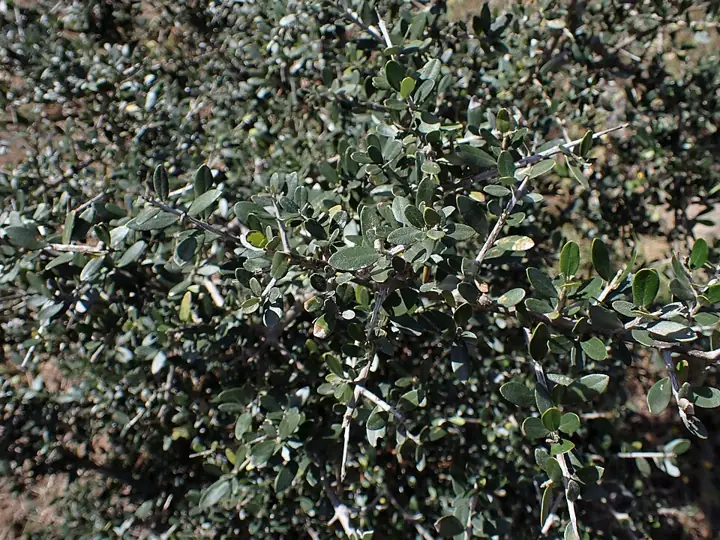 Tree
The islands' wild olive. Takes formative pruning and grows in poor, limy soils.
See profile →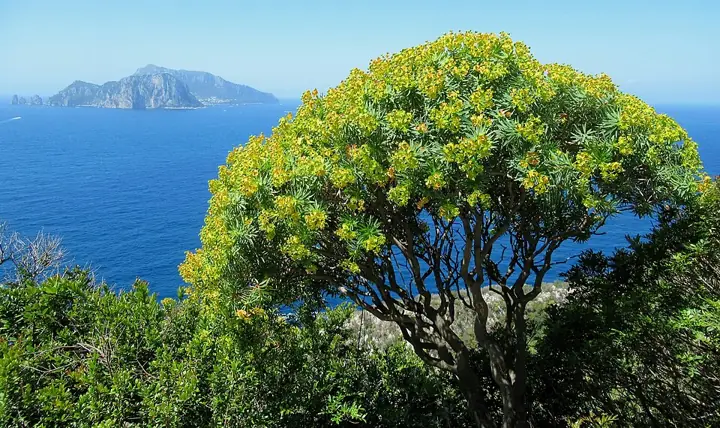 Shrub
A perfect dome that turns green in autumn, yellow in spring and red before dropping its leaves in summer: that is how it saves water. Its latex is toxic and an irritant.
See profile →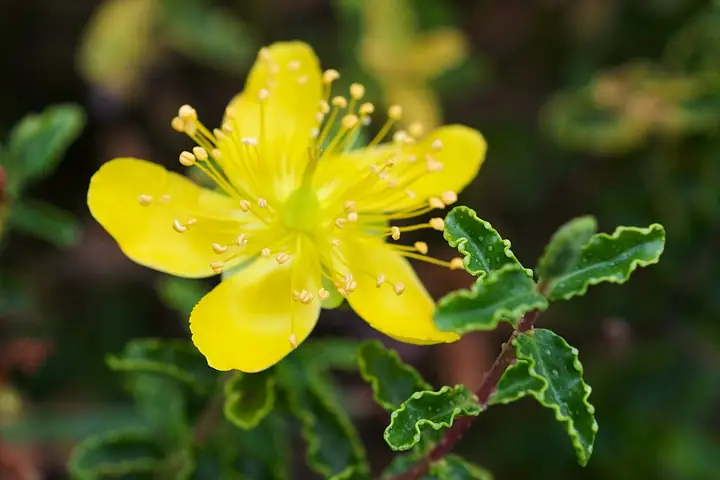 Shrub
Grows wild only in the Balearic Islands. A compact shrub with wavy, aromatic leaves and yellow flowers from spring to summer. Very drought-resistant.
See profile →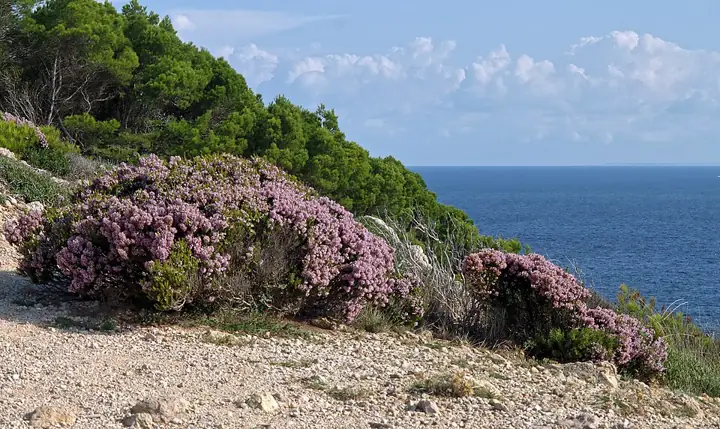 Shrub
A native of Mallorca's scrubland: smothered in pink flowers in autumn, when little else blooms, feeding the bees. Needs no watering or feeding.
See profile →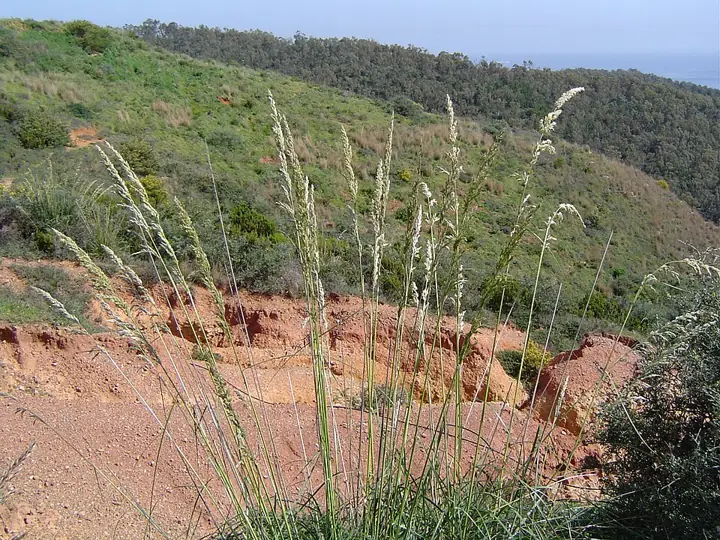 Ground cover
The great grass of Mallorca's mountains: clumps of long leaves and tall plumes that sway in the wind. Holds banks and needs nothing. Give it room: the leaf edges cut.
See profile →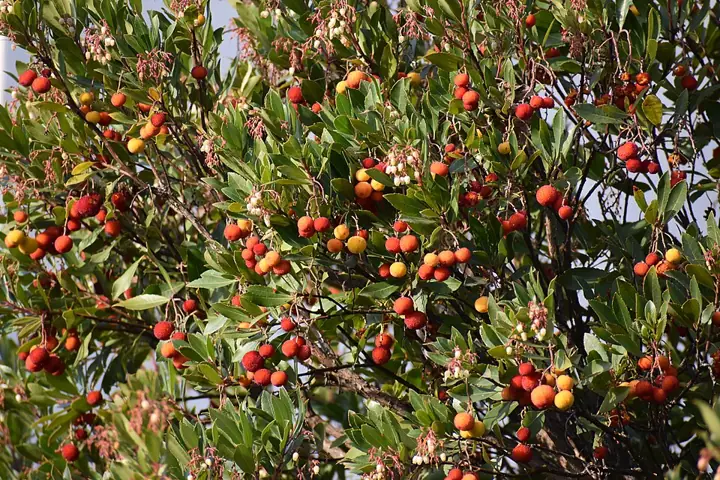 Tree
A native evergreen small tree. In autumn it shows white flowers and edible red fruit at the same time. Once established it copes well with drought and wind.
See profile →How to plant a seafront garden in Mallorca: what salt spray does, how to give shelter from the wind and which plants survive where others scorch.
Read the guide →Jan – DecA garden full of life: which plants offer flowers and fruit in each season for bees, butterflies and birds, and what to change in your upkeep so they stay.
Read the guide →Mar – OctHow to recognise the commonest garden pests — aphids, scale insects, spider mites and whitefly — and treat them in time with gentle remedies.
Read the guide →